How do you get a license?
An all you need to know guide about getting an amateur radio license.
How to get a amateur radio license
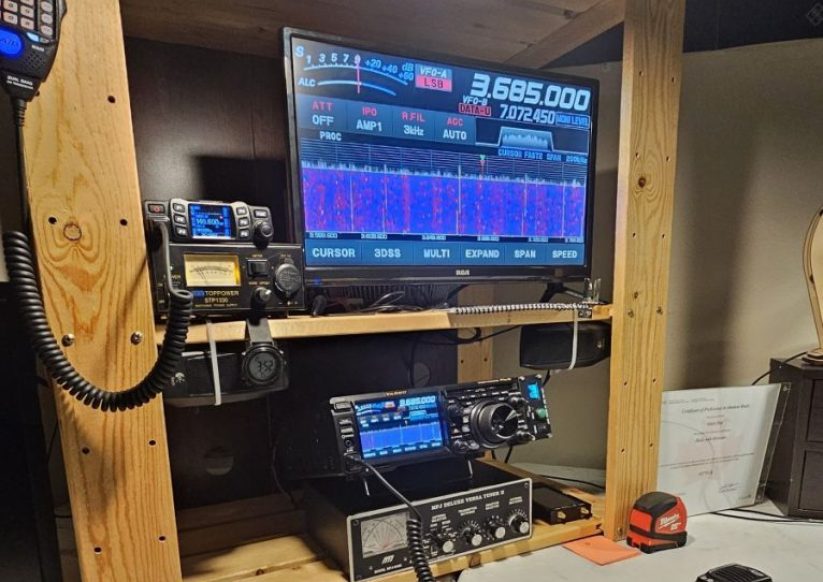
What is Amateur Radio?
Amateur Radio is a form of communication, a hobby, a community service and a vital service in the event of an emergency.
Amateur Radio could be a teacher in Nova Scotia making friends over the radio with another Radio Amateur in New Zealand; an Alberta teenager using her computer to upload a chess move through her radio which is retrieved by a fellow chess fan in Florida via an Amateur Radio space satellite; or a truck driver in Manitoba contacting Radio Amateurs in a hundred countries during a single weekend contest.
The appeal of Amateur Radio is the ability to communicate across the country, around the globe, and even with astronauts on space missions. Many Radio Amateurs build and experiment with radios, antennas.
Do you?
- enjoy the thought of communicating with people around the world without the use of phones or the Internet?
- like experimenting with electronics?
- like interfacing radio transmitters with your computer?
- want to serve your community at social events or during serious emergency situations?
- want to talk to astronauts in the International Space Station?
- look forward to developing new relationships and learning what is going on around the world through the airwaves?
If you answered maybe or yes to any one or a few of these questions, then Amateur Radio may be for you!
(From: RAC Canada)
————INSERT YOUTUBE VIDEO HERE————-
____________________________________________________________________________________________
Amateur Radio in Canada is regulated by a federal government department called Innovation, Science and Economic Development Canada (ISED; formerly Industry Canada).
The first level of authorization is the Amateur Radio Operator Certificate with the Basic Qualification. Passing (70%) a multiple choice exam of 100 questions will provide you with your own call sign and allow you to operate on all Amateur Radio frequencies above 30 MHz. These are most often used for relatively short-range radio to radio communications that can be extended to greater distances using “repeaters” operated by other Radio Amateurs.
The next level of authorization allows Radio Amateurs to use all of the Amateur frequency bands including those allowing direct communications with other Radio Amateurs over much greater distances.
There are two ways to achieve these greater operating privileges: by passing the Basic exam and also by demonstrating the ability to send and receive Morse Code at 5 words per minute or by scoring a higher mark on the Basic exam. The “Basic with Honours” qualification is awarded to persons who get 80% or higher on the 100-question, multiple choice exam. Today the majority of candidates who pass the Basic exam achieve Honours and are able to use all Amateur Radio bands immediately.
The Advanced Qualification added to your Basic Qualification will allow you build and operate your own transmitting equipment, sponsor a club station, run higher power and operate your own repeater station. To earn this qualification requires passing a 50-question multiple choice examination on radio theory.
The examinations may be taken in any order but station operating privileges require a Basic Qualification. Candidates for the examination for Basic, Morse Code or Advanced qualifications are examined by an accredited examiner.
(From: RAC Canada)
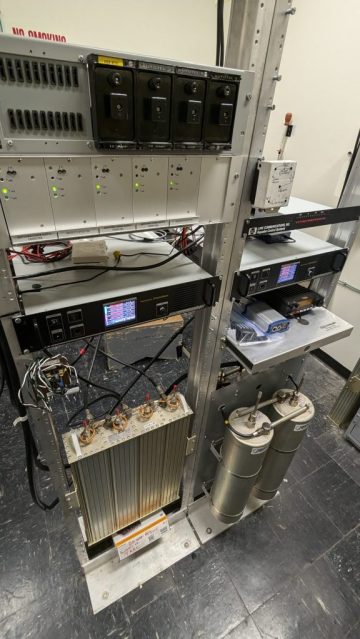
VE7RTK repeater site on copper mountain.
First steps
Step 1:
Send us an email telling us you would like to get a license, we can help you, but only if you contact us. We would love to share our extensive knowledge and help in your journey.
Step 2:
Go online and buy a self study guide, or sign up for a online course through Radio Amateurs Canada (RAC). There are other options available, contact us for more info.
For the study guide go to Hamstudy and pick up a basic study guide.
Or sign up for the winter 2026 (or following) online course: rac.ca (you don’t need a Hamstudy guide for this one, but a different one, follow the instructions on the site. If you have any issues email us!)
Step 3:
Study, Study, Study! If you have anything your not understanding or want clarification send us an email, we’d love to help you out! We strongly recommend you take lots of practice tests at ised.ca to ensure your success.
Step 4:
Once you think your ready, send us an email and we’ll direct you to one of our 2 accredited examiners. We don’t charge a penny and you can take the exams as many tries as you want (within reason).
Step 5:
We have club equipment we can lend to you to get you on the air as soon as possible! We can’t wait to have an on air QSO with you one you have your license!